11/20/26
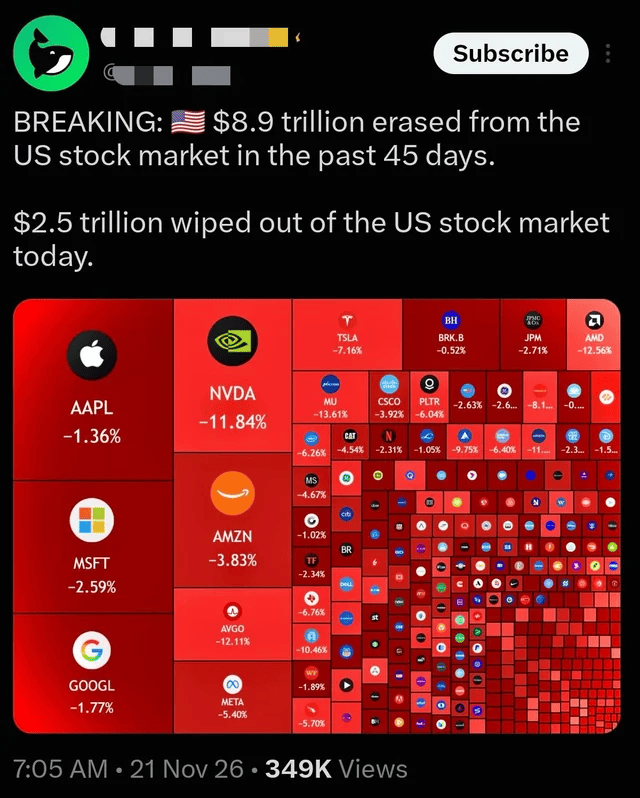
Let’s be honest, the market has been looking pretty rough. Until I got into the financial industry, I didn’t entirely understand what something like that meant though. So let’s talk about it.
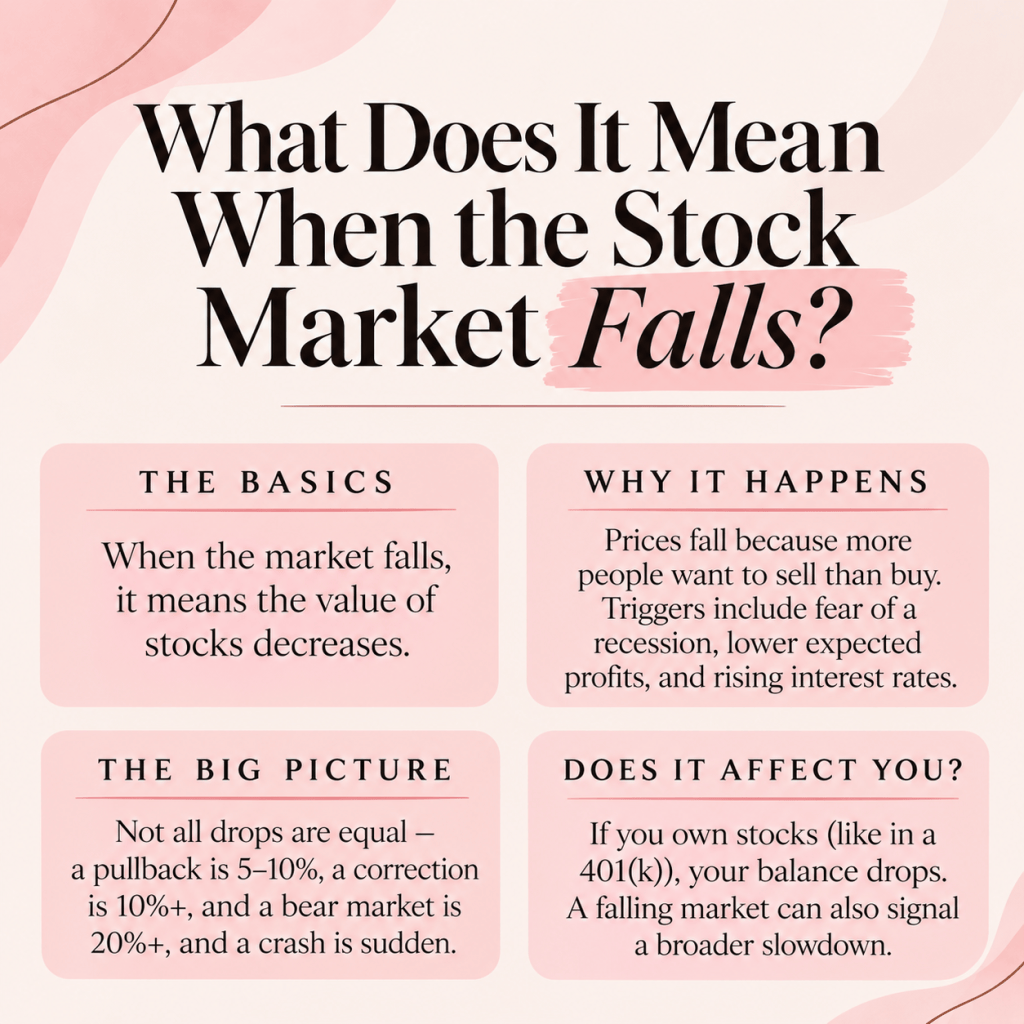
When people say “the market,” they usually mean a stock index (think of it as a scoreboard tracking the combined value of a group of companies). The S&P 500 follows 500 of the largest U.S. companies, the Dow tracks 30 well-known ones, and the Nasdaq leans toward tech. When an index falls, it means investors collectively decided those companies are worth less than they were before.
When someone says the stock market is falling, they’re talking about the value of stocks decreasing. A stock is essentially a small piece of ownership in a company. When you buy a share of Apple, Amazon, or another publicly traded company, you’re buying a small ownership stake in that business. The price of that share changes throughout the day depending on what investors are willing to pay for it.
Think of it like buying a house. Imagine you purchase a home for $400,000. A year later, similar homes in your neighborhood are selling for $350,000. Your house didn’t physically disappear, and you still own the same property, but its estimated market value has decreased. The stock market works similarly. When investors become less confident about the economy, a company’s future, or the direction of the market, they may start selling their shares. When more people want to sell than buy at previous prices, stock prices can fall.
Prices fall because more people want to sell than buy. The triggers vary from fear of a recession, lower expected profits, rising interest rates, borrowing becoming costlier. This then encourages making safer investments like bonds more appealing.
Not all drops are equal. A pullback is a decline of 5 to 10 percent and is routine. A correction is 10 percent or more, and a bear market is 20 percent or more from a recent high. A crash is a sudden, steep fall, often within days.
In 1987, the Dow fell about 22 percent in a single day, helped along by computerized trading and panic, yet it recovered within a couple of years. The dot-com bust of 2000 to 2002 wiped out roughly 78 percent of the Nasdaq’s value after investors piled into internet companies with little profit. The 2008 financial crisis, rooted in risky mortgages, sent the S&P 500 down about 57 percent and cost millions of people their jobs and homes. And in 2020, the market fell about 34 percent in just over a month as COVID shut down economies, then rebounded to new highs within months. That last one is a reminder that stock prices reflect expectations about the future, not how bad things feel today.
Does it affect you? If you own stocks directly or through a 401(k) or index fund, your balance drops. If you’re close to retirement, it matters more because you have less time to wait for a recovery. Even if you don’t own stocks, a falling market can signal or deepen a broader slowdown, though the market and the economy are related, not identical.
What a stock is
Interest rates, borrowing costs, and bonds
Pullback, correction, bear market
- Kiplinger: 8 Facts About Market Corrections (pullback, correction, and bear market ranges)
- Investor.gov: Bear Market (the official 20% definition)
1987 crash
Dot-com bust
2008 financial crisis
2020 COVID crash


Leave a Reply