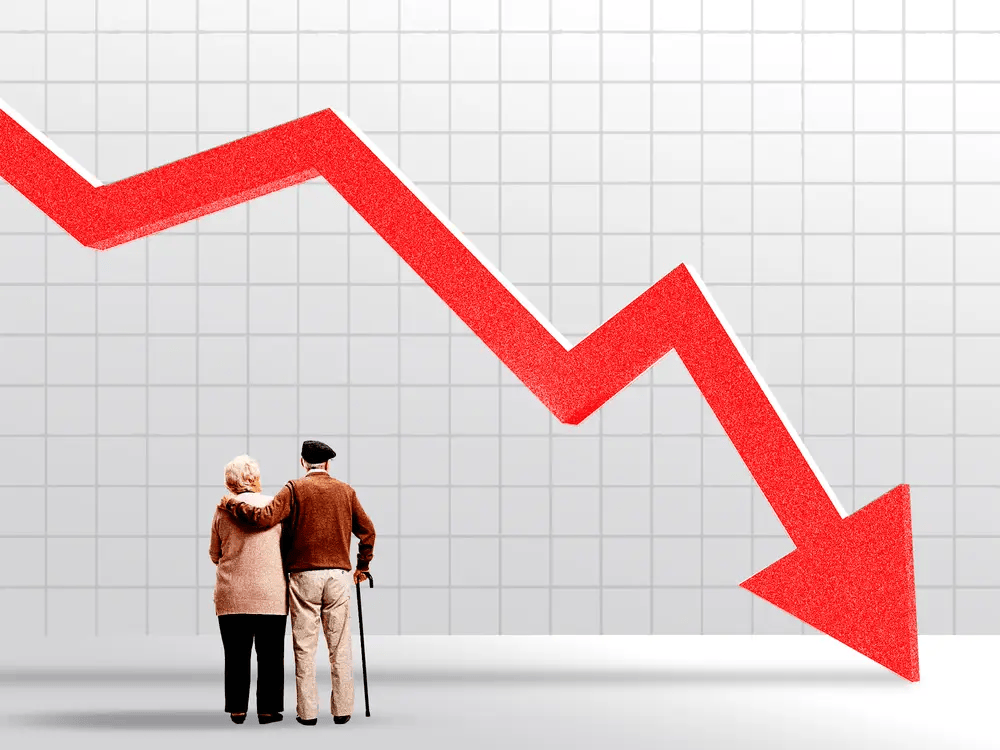
Most of us think of a market crash as a bad headline and a rough few months. For people who were retired or about to retire between 2000 and 2010, it was more. It changed when they stopped working, how much they could spend, and how long their savings lasted.
Imagine spending 30 or 40 years building your retirement savings, finally reaching the point where you can stop working, travel, enjoy your family, and start living off the money you’ve worked so hard to accumulate.
Now imagine that just a year or two into retirement, the market takes a major downturn.
Your account balance drops, but your monthly expenses don’t. You still need to pay your mortgage, buy groceries, travel, and enjoy the retirement you’ve planned for. Not to mention pay taxes, fees, and keep up with inflation. So, you start withdrawing money from an account that is suddenly worth less than it was before.
This is one of the biggest challenges retirees can face: It’s not just about how much money you have when you retire. It’s about how long that money can last.
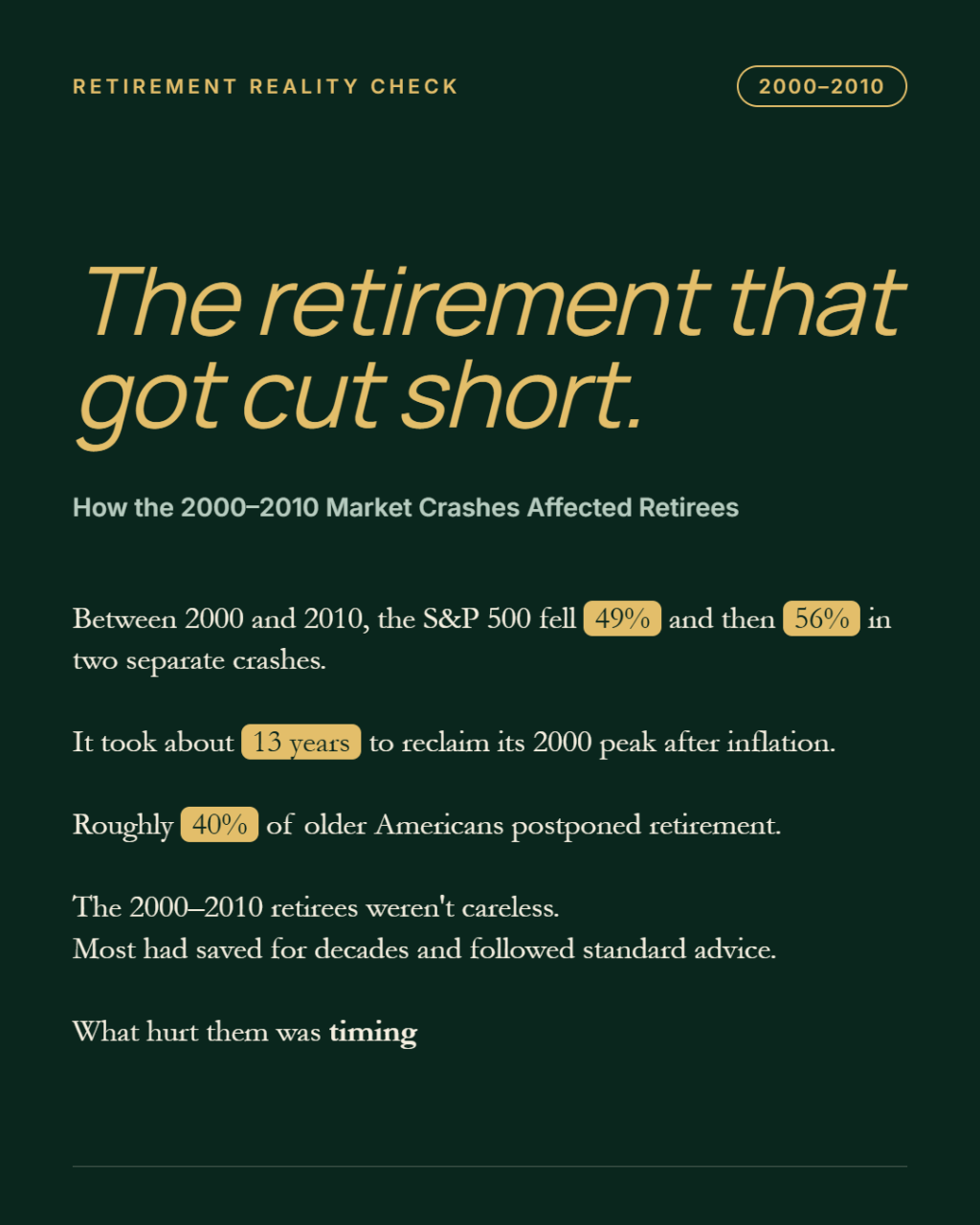
There were TWO crashes in one decade! The first hit in 2000, when the dot-com bubble burst. The S&P 500 lost 49% between March 2000 and October 2002. Then came the financial crisis, in which the index fell just over 56% between October 2007 and March 2009. Anyone who retired in 2000 faced both within their first ten years.
Another analysis found it took roughly 13 years for the market to reclaim its 2000 peak once inflation was counted. When someone is already retired, they don’t always have the luxury of waiting years for the market to recover before accessing their savings.
Younger workers could ride out the drop. They were still earning paychecks and buying shares at lower prices. Retirees were doing the opposite: pulling money out while prices were falling. Each withdrawal sold more shares at a bargain price, and those shares weren’t around when the market recovered.
People worked longer than they planned. About 40 percent of older Americans postponed retirement after the Great Recession. The Boston College survey found that most of those who delayed expected to work four or more additional years. But the typical person who delayed planned to work only about 1.6 years longer, which wasn’t enough to make up for what they lost. Researchers estimated that recovering the losses would have taken between 3.7 and 5 extra years. In other words, many people traded time for money and still came up short. Some who had already retired returned to work as well.
The 2000–2010 retirees weren’t careless. Most had saved for decades and followed standard advice. What hurt them was timing. A market decline in the first few years of retirement does far more damage than the same decline later.
If you are in/nearing retirement or know someone who is, ask: “Would your current retirement last 30 years (ages 65-95) should the market fall 49%? With consideration of taxes, fees, and inflation?”


Leave a Reply