
11/6/26
You may have noticed, certain indices took a hit. I know it’s all over my social media feed; headlines about market declines, investors reacting to uncertainty, and account balances moving in the wrong direction. I would like to bring up where my thoughts go.
Overall, technology and artificial intelligence-related stocks took some of the hardest hits. From news reports, investors reconsidered the outlook for the industry as a whole. Reasoning is up to speculation, interpretation, and various perspectives. Speculation about: political changes, tighter regulation, and costs vs. returns of infrastructure.
Today made me think of how we’ve seen something like this.
(Now, keep in mind that some crashes have happened in a single day, while others took months or years to unfold. I am simply sharing information that I find interesting and my considerations of it.)
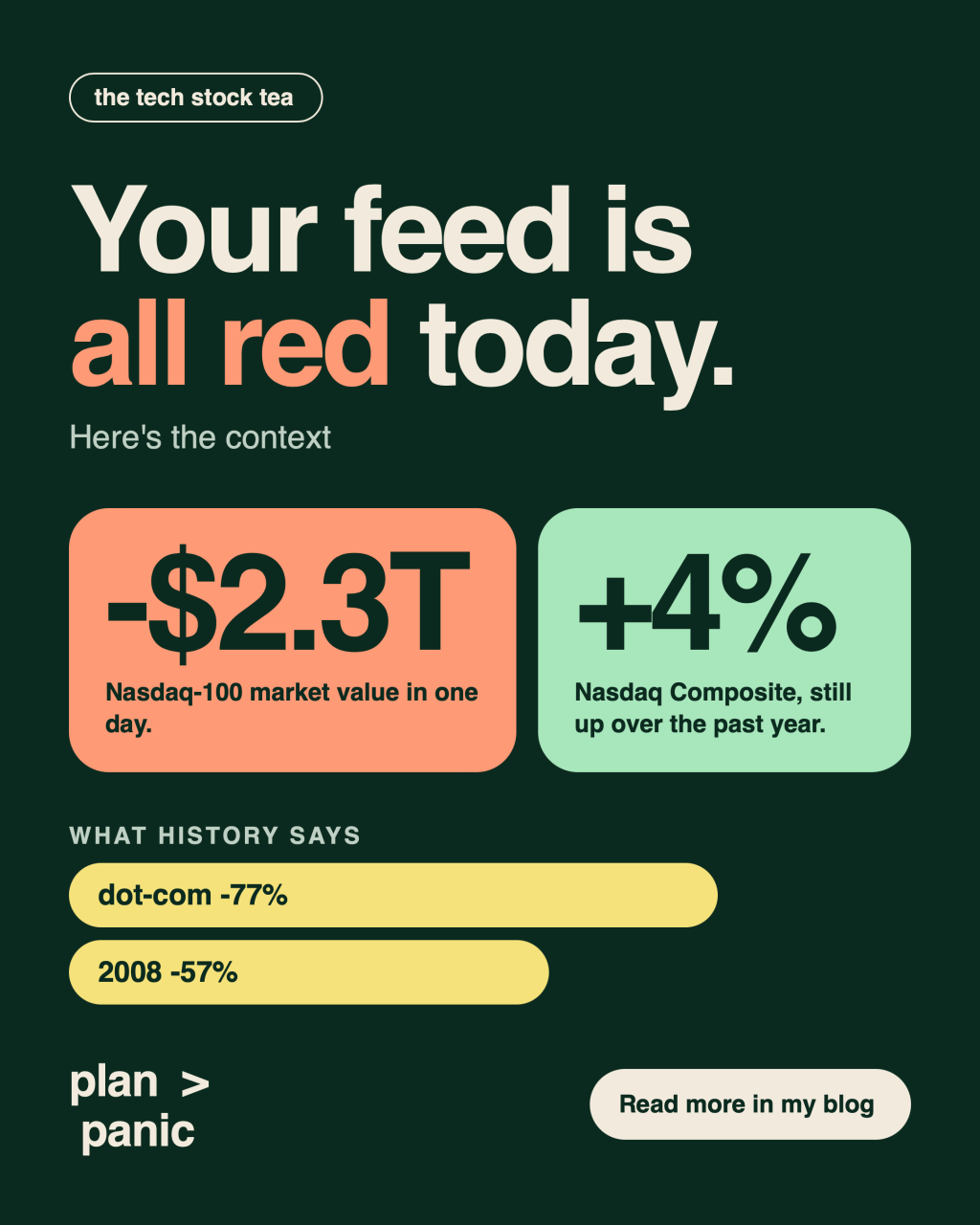
Think back to the dot-com crash in the early 2000s. Investors were excited about the future of the internet, and money was pouring into technology companies. Eventually, expectations got ahead of reality, and the Nasdaq lost approximately 77% of its value from March 2000 to October 2002. According to Goldman Sachs’ historical account of the dot-com bubble, it took until 2015 for the Nasdaq to reach a new record high.
Then came 2008. The housing market and financial system experienced a major crisis, and the S&P 500 fell approximately 57% from its previous high. For people approaching retirement or already relying on their savings, those losses could have changed plans they had spent years preparing for. Reuters explains the severity of the 2008 decline and how it compared with other major market downturns.
Now, let’s talk about today.

According to J.P. Morgan’s 2026 AI investment outlook, global AI-related capital spending is projected to reach approximately $900 billion in 2026 alone. That’s a lot of money being invested in the future of one industry.
According to Yahoo Finance’s market coverage, the Nasdaq-100 lost approximately $2.3 trillion in market value. Much of the pressure came from technology and semiconductor companies tied to AI. For perspective, that’s not $3 trillion being taken out of people’s bank accounts, but the estimated reduction in the combined value of those companies based on their falling stock prices.
Now, despite the November 5 decline, the Nasdaq Composite was still up approximately 4% over the previous year.
No two market downturns are exactly alike, but history gives us examples of what can happen when investor expectations don’t meet reality. In school, we’re taught to look at history so we can learn from what happened before us. We learn history so that it may not repeat itself. I think the same lesson should be applied to our finances.
Now, instead of being like me trying to predict and place bets on the next market crash, maybe spend some time thinking about the big picture as someone who is saving for retirement, building wealth for themselves, their future/current families, and having to depend on their investments. It’s about what you have in place when things don’t go as planned.


Leave a Reply