11/13/26
Have you ever changed jobs, started a new career, or wondered what happens to the retirement savings you’ve been building over the years? You might have heard the term rollover, but were never actually told what it means?
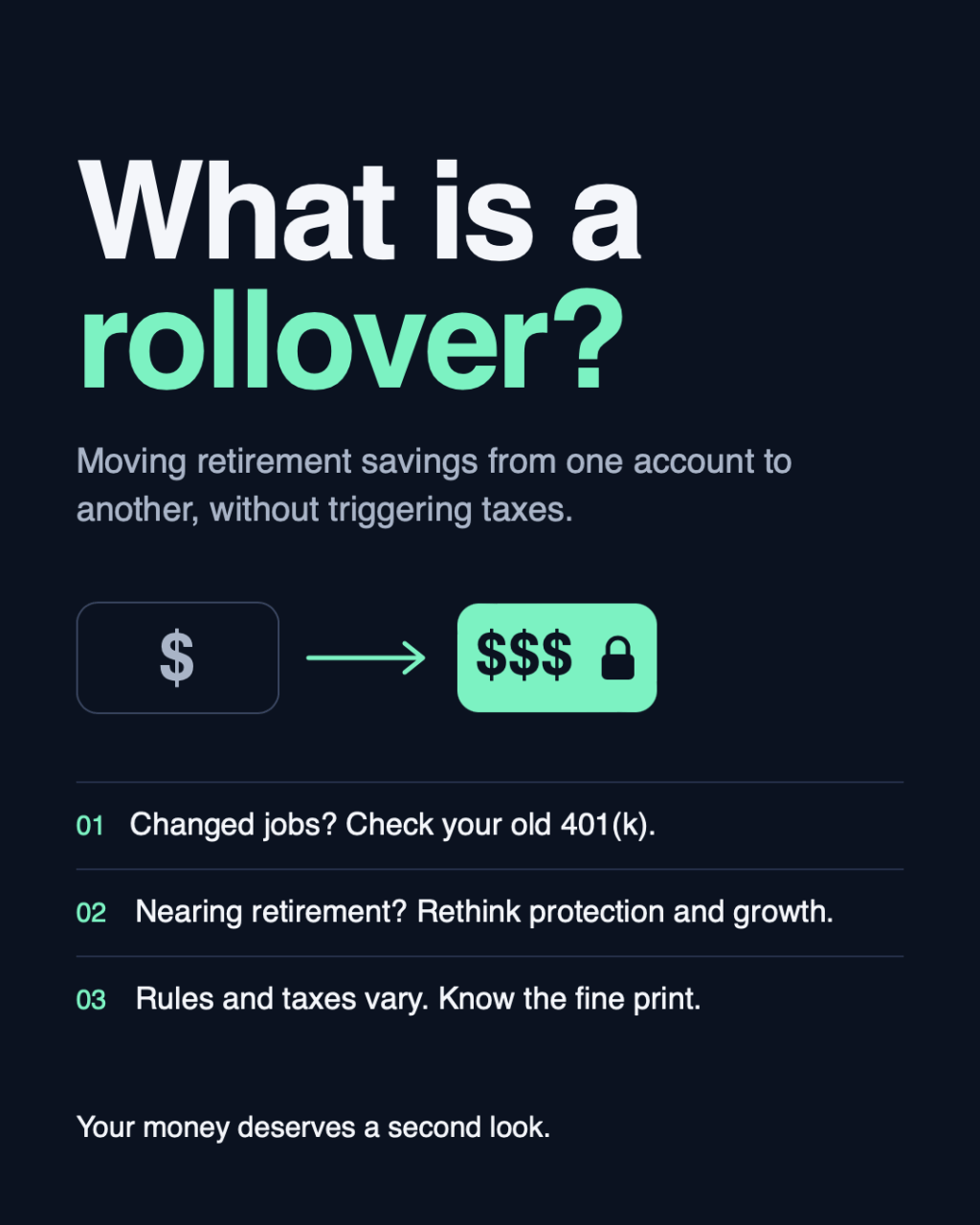
In a nutshell, a rollover is the process of moving money from one retirement account into another, typically without triggering any taxes either. It allows someone to move their existing retirement savings into an account that may better fit their current financial situation, retirement timeline, and future goals.

For example, imagine someone who has spent 30 years working, consistently contributing to their employer-sponsored retirement plan, and building up a substantial amount of savings. As retirement approaches, they may start thinking differently about their money. Instead of focusing entirely on accumulating more, they might want to start prioritizing how to protect what they’ve already built while still allowing it the potential to grow. Most people’s retirement accounts are still in a volatile account where money loss is not only still possible but more costly. A rollover can give them an opportunity to explore different account options and investment strategies that better align with this next stage of life.
Another common example is someone who changes employers. Maybe they contributed to a 401(k) at their previous job but have since moved on to a new company.
Traditional IRAs are a common and perfectly valid retirement savings option. However, they aren’t the only option available. Depending on someone’s goals, they may also want to explore strategies that emphasize principal protection, tax-deferred growth, or a combination of protection and growth potential. Investing and financial planning has a multitude of options, it’s important to consider what you have and what you want.
The important thing to remember is that a rollover isn’t just about moving money from Point A to Point B. It’s an opportunity to take a closer look at where your retirement savings are, how they’re positioned, and whether they still align with what you want your future to look like.
One important detail: Rollovers have specific rules, tax considerations, and fine print that need to be understood on an individual basis before making any decisions.
Sometimes, the money you’ve spent years building deserves a second look. After all, retirement planning isn’t just about how much you save. It’s also about understanding how that money can work for you in the years ahead. Think back to your previous job, could you still have some money lying around somewhere that you could actually put somewhere that could work for you?


Leave a Reply