11/19/26
Social Security affects more than just people who are already retired. It affects younger generations who are paying into the system today, people approaching retirement, and anyone trying to figure out how much income they can expect later in life. Social Security has been a major part of retirement for generations.
One Big Beautiful Bill changed things and there are concerns about the program’s long-term funding. For many Americans, it’s something they have spent their entire working lives paying into, expecting to receive a monthly benefit when they retire. But there is a bigger conversation happening about the program’s future, and recent legislation has added another layer to it.
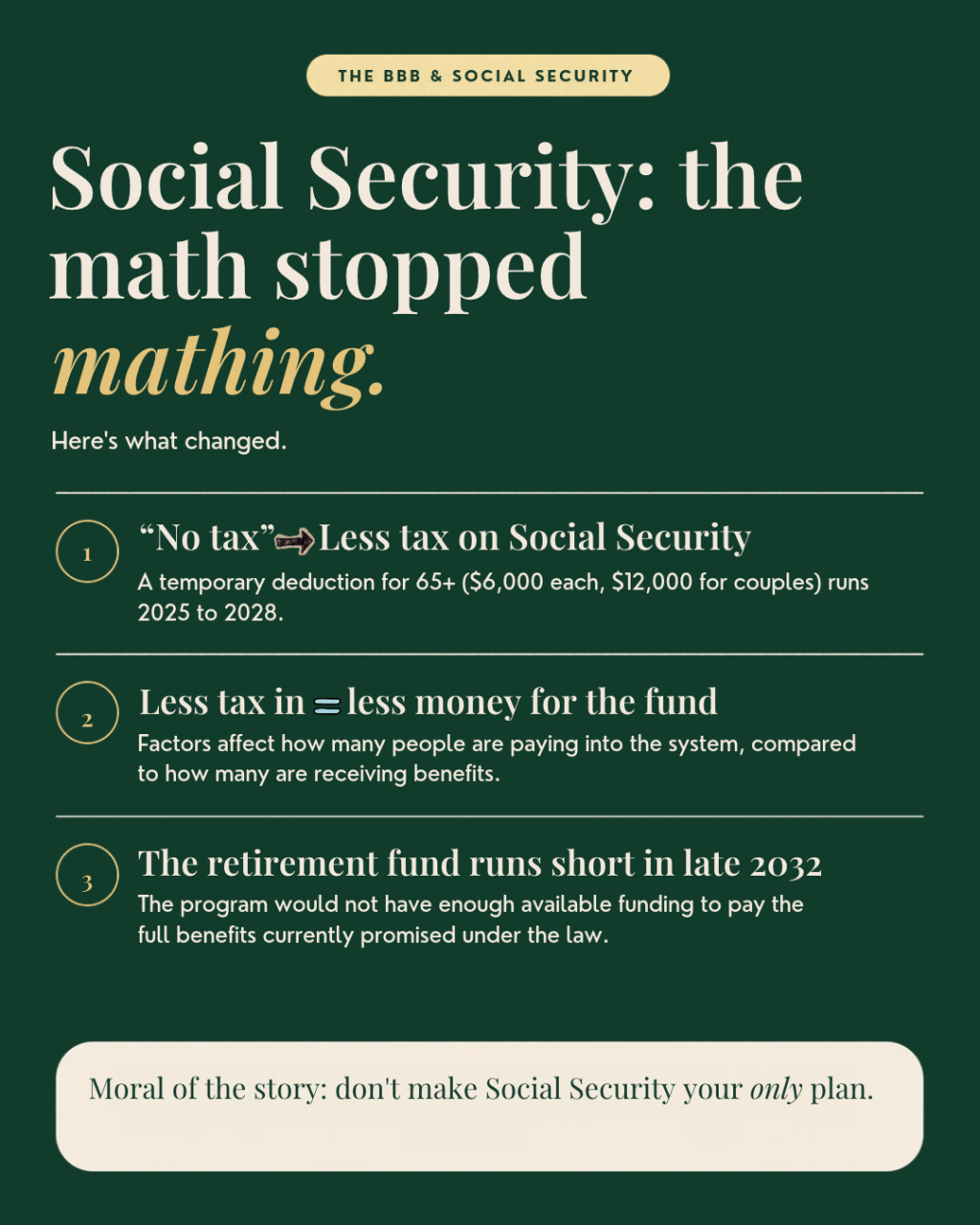
In July 2025, President Donald Trump signed the One Big Beautiful Bill Act into law. One of the promises surrounding the legislation was that it would eliminate taxes on Social Security benefits. However, that’s not exactly what happened.
Instead of completely eliminating those taxes, the legislation introduced an additional 6,000 tax deduction for eligible individuals age 65 and older (12,000 for eligible married couples). This deduction is temporary, applying from 2025 through 2028, and is subject to income limits. It can help some retirees reduce their federal income tax, but it does not mean Social Security benefits are officially tax-free.
There’s more to take into consideration. Social Security is already facing a long-term funding challenge. According to the Social Security Administration’s 2026 Trustees Report, the retirement trust fund is projected to run out of its reserves in the fourth quarter of 2032. Now that doesn’t mean Social Security disappears or that retirees suddenly receive nothing. Workers and employers would still be paying into the system, and money would continue coming in. However, the program would not have enough available funding to pay the full benefits currently promised under the law.
With an aging population, lower birth rates, and changes in immigration, all of these factors affect how many people are paying into the system, compared to how many are receiving benefits. When fewer workers are supporting a growing number of retirees, the math, stops mathing.
It’s important to be aware of issues that affect our futures because relying on one source of retirement income can leave you with very little flexibility if/when the rules or benefits change.
Whether you’re 25, 45, or 65, it’s worth asking yourself: What would my retirement look like if Social Security provided less than I expected? Am I building other sources of retirement income? Have I considered inflation, healthcare expenses, and the possibility of living longer than I planned?
Social Security was designed to be part of retirement income, not necessarily the entire retirement plan. The more you understand about what you’re entitled to receive and what other resources you have available, the better prepared you can be for the future. The earlier you understand your options, the more time you have to make informed decisions.


Leave a Reply