
11/5/26
The financial headlines lately show just how quickly the conversation can change. One day the outlook seems positive; the next, there’s concerns about inflation, interest rates, global events, or economic uncertainty. Even investors are questioning what comes next.
The truth is, nobody knows exactly what the market will do tomorrow, next month, or even next year. And while it’s natural to want answers, building a financial future around trying to predict the market can leave you constantly reacting to things outside your control.
A better approach? Focus on what you can prepare for.
This week has been a reminder of just how quickly things can change. According to the Associated Press, on Thursday, November 5, the S&P 500 dropped 4.4%, the Nasdaq fell 5.5%, and the Dow lost more than 1,800 points in a single day. That’s a pretty significant move, especially for anyone watching their retirement savings or investment accounts.
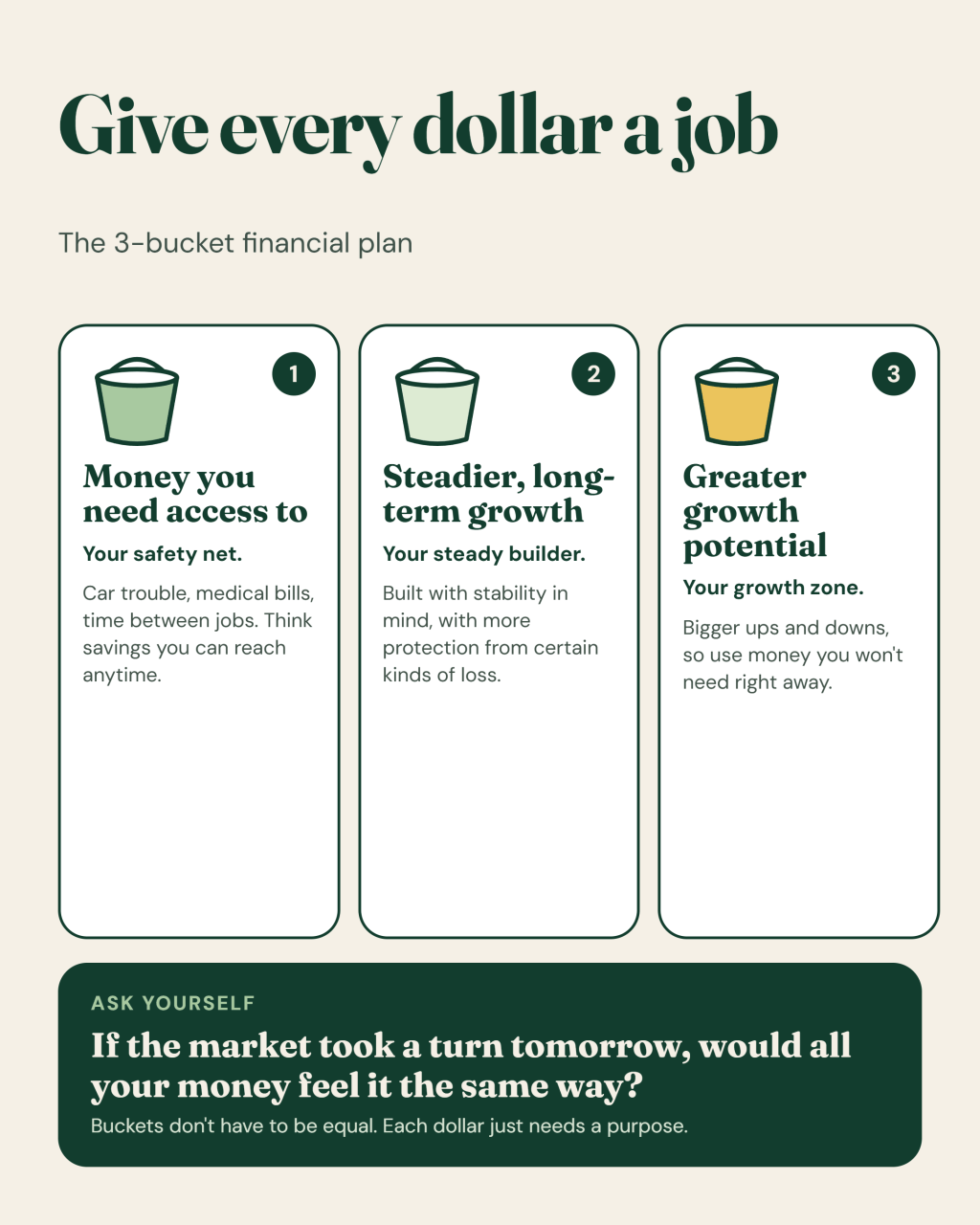
One way to approach financial planning is to think about your money as being divided into three different buckets. Each bucket has a different purpose, timeline, and level of risk.
Bucket #1: Money You Need Access To
Life happens, and usually when we least expect it. Your car breaks down, an unexpected medical bill comes up, or you find yourself between jobs. This is where having accessible emergency savings matters.
Think of this bucket as your financial safety net. It may include money in a traditional savings account or a high-yield savings account that you can access when needed. The goal isn’t necessarily to earn the highest return. It’s to have money available without having to sell investments or disrupt your long-term plans.
Bucket #2: Money for Steadier, Long-Term Accumulation
The second bucket is about building your money over time while placing more emphasis on stability and protecting against certain types of loss.
Depending on your goals, these accounts can be used as a strategy designed for more predictable accumulation. Some indexed products also offer contractual floor of protection and a return on gains.
The idea is to give a portion of your money a different job than your higher-risk investments. You may not experience the same growth potential as the stock market, but you may have a different level of exposure to market losses.
Bucket #3: Money for Greater Growth Potential
The third bucket is for money that has more room to pursue growth and, with it, take on greater risk.
This may include stocks, stock funds, or other market-based investments. These investments can experience significant ups and downs, as we’ve seen this week.
This bucket is generally better suited for money you don’t anticipate needing immediately and can afford to lose it.
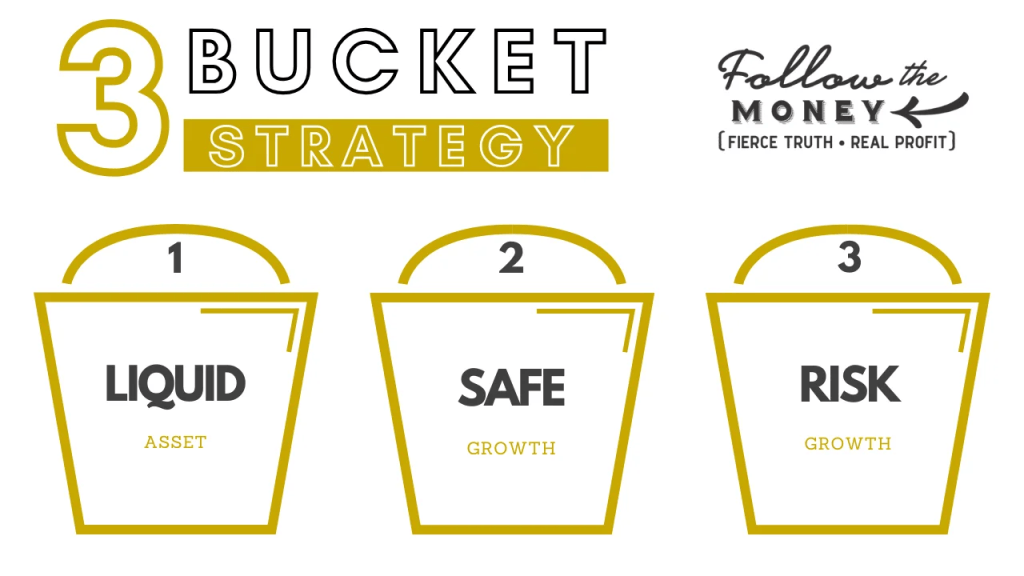
The point isn’t to put an equal amount of money into all three buckets. It’s to understand that not every dollar needs to serve the same purpose.
Your emergency savings, long-term accumulation, and growth investments can each play a different role in your overall financial picture.
The market will have good days and bad days. We can’t predict every downturn, but we can be intentional about where our money is positioned before one happens.
The goal isn’t to find one product that solves every financial concern. It’s to understand how different pieces can work together based on your goals, needs, and comfort with risk.
You can’t control inflation, market corrections, interest rates, or unexpected economic changes. But you can take steps to prepare for different possibilities.
Ask yourself:
If the market took an unexpected turn tomorrow, would your financial plan be prepared to handle it?
Would all of your money be affected in the same way, or do you have different strategies working toward different goals?
You may not be able to predict what’s coming, but you can make thoughtful decisions today that help put you in a better position for tomorrow.


Leave a Reply